What is forex and how do you start trading it as a beginner?
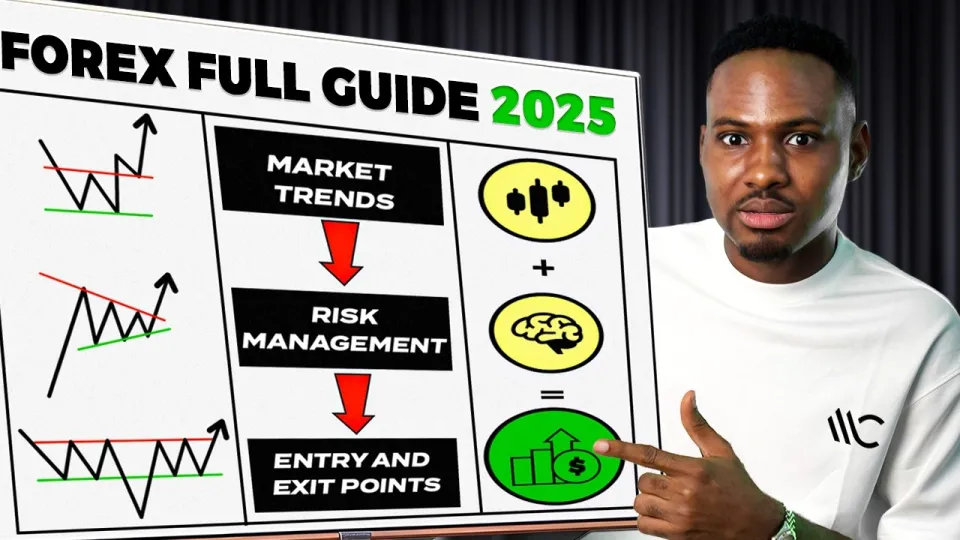
Video: How To Start Forex Trading For Beginners’ 2025 (Full Course)
Need articles like this for your video? They help promote it on YouTube and Google — order them in the Telegram bot @sat_sit_bot. The bot writes and publishes the articles itself (with your YouTube video embedded) on popular topical websites (no ads). Your first 50 articles are free.
Forex is the global marketplace where national currencies are bought and sold in pairs, such as EUR/USD or GBP/JPY. To start trading forex as a beginner, you need a clear understanding of how the market works, a demo account on a platform like MetaTrader 5, a regulated broker, and a simple strategy with strict risk management. Jeffrey Benson Forex has published a full beginner course that walks through each of these steps, and you can access his student plans and resources at firepipsfx.com/plans.
What forex trading actually is and who participates in it
Forex trading is the simultaneous purchase of one currency and sale of another on the foreign exchange market. The market is decentralized and operates over-the-counter through a network of banks, brokers, institutions and retail traders. Currency prices move because of interest rates, inflation data, geopolitical events and supply and demand. The most traded pair is EUR/USD, followed by USD/JPY and GBP/USD. Retail traders typically access forex through a broker that provides leverage, which magnifies both profits and losses. Unlike stock exchanges, forex has no central location and trades 24 hours a day from Monday to Friday.
How the forex market works across sessions and time zones
The forex market runs continuously because financial centers open and close in sequence around the world. The trading day begins in Sydney, then moves to Tokyo, followed by London and finally New York. The London session overlaps with New York and is generally the most liquid, which often means tighter spreads and more movement. Beginners should note that the best time to trade a pair is when its underlying currencies' sessions are active; for example, EUR/USD is most active during the London and New York sessions. Understanding these four sessions helps avoid trading during dead hours when spreads widen and price action is choppy.
Tools and platforms every beginner needs before the first trade
A beginner needs a reliable trading platform, a broker with tight spreads and fast execution, and a way to track news and economic releases. MetaTrader 5 (MT5) is the standard platform for forex trading, offering charts, indicators, order types and automated trading. Jeffrey Benson recommends signing up with Assex Markets and linking the account to MT5; the full registration link is in the description of his video. Beyond the platform, you should have a demo account for practice, a notebook for recording trades and observations, and a calendar of economic events. A trading journal is not optional: it is how you identify mistakes and measure progress. Many viewers of the course note that writing notes while watching tutorials helps the material stick, especially the four market sessions.
A simple strategy foundation for your first trades
A workable beginner strategy is built on three elements: direction, entry and risk. First, determine the trend on a higher timeframe such as the daily chart. Second, look for an entry on a lower timeframe using support and resistance or a moving average. Third, define your stop-loss and take-profit levels before entering the trade. A common approach is to risk no more than 1-2% of your account on any single trade. This means if you have a $1,000 account, your maximum loss per trade should be $10 to $20. Position sizing follows directly from that rule: if your stop-loss is 20 pips away, you calculate the lot size so that 20 pips equals your risk amount. Beginners often overlook this step and trade too large, which is why risk management is the most important lesson in any forex course.
Placing your first trade step by step
Placing a trade on MT5 involves a sequence of clear actions. First, open the chart of your chosen pair and set your timeframe. Second, identify your entry level, stop-loss and take-profit based on your strategy. Third, calculate your position size according to your risk rule. Fourth, place the order: a market order executes immediately, while a pending order waits for a specific price. Fifth, monitor the trade and let it hit your stop or target rather than closing it out of emotion. Beginners should practice this entire sequence on a demo account until it becomes routine. The course demonstrates live chart breakdowns and trade setups so you can see the process in real time.
Common mistakes that cost beginners money
The most expensive beginner mistakes are trading without a stop-loss, risking too much per trade, and revenge trading after a loss. Overtrading is another trap: taking too many positions because you are bored or impatient. Many new traders also skip the demo phase and go straight to live money, which usually ends in a blown account. Emotional decisions, such as moving a stop-loss to avoid a loss, destroy accounts faster than any strategy flaw. Another frequent error is trading during major news events without understanding the volatility involved. The course stresses that consistency and discipline matter more than finding a perfect strategy. Viewers often mention that risk management was the missing piece in their learning until they saw it explained clearly.
Useful links from the course
- Student plans and mentorship: firepipsfx.com/plans
- Free daily signal channel: t.me/firepipsignals
- Broker registration (Assex Markets): my.assexmarkets.com/auth/register?partner_code=1699134
- Premium signal group access: t.me/jeffreybenzhelpbot
Final thoughts on starting forex the right way
Starting forex trading is a process, not a single decision. The path is clear: learn how the market works, practice on a demo account, use a regulated broker and MT5, apply a simple strategy, and above all protect your capital with strict risk management. The full beginner course by Jeffrey Benson Forex covers each of these areas in detail and is a solid starting point for anyone serious about learning. If you want structured guidance, you can review the student plans at firepipsfx.com/plans and begin with a demo account today.
Key takeaways
- Forex is the world's largest financial market, trading currencies 24 hours a day, 5 days a week.
- Beginners should start with a demo account on MetaTrader 5 before risking real money.
- Risk management means risking 1-2% of your account per trade and always using a stop-loss.
- The four major sessions are Sydney, Tokyo, London and New York.
- Jeffrey Benson Forex offers a free full beginner course and a free daily signal channel.
Source: How To Start Forex Trading For Beginners’ 2025 (Full Course) · Markdown version
Questions & answers
How much money do I need to start forex trading?
You can open a live account with as little as $10 to $100 with many brokers, but beginners should start with a demo account that costs nothing. The key is not the initial deposit but your risk per trade: never risk more than 1-2% of your account on a single position.
How long does it take to learn forex trading?
Most beginners need several months of consistent practice on a demo account before they are ready for live trading. Mastery of risk management and a simple strategy takes time, and many traders spend one to two years refining their approach before becoming consistently profitable.
Is forex trading risky for beginners?
Yes, forex is high-risk because leverage magnifies both gains and losses. Most retail traders lose money, so proper education, a demo phase, and strict risk management with stop-losses are essential before risking real capital.
What is the best time of day to trade forex?
The London and New York sessions overlap and typically offer the highest liquidity and volatility, which is often best for active trading. Beginners should focus on the sessions that match the currencies in their chosen pair and avoid low-liquidity hours.